
Commentary
“It Makes No Difference”
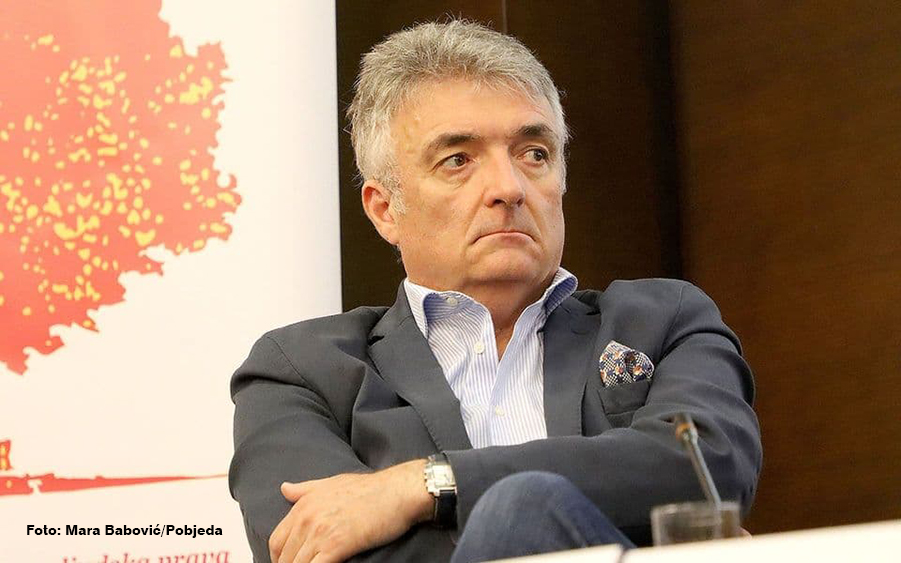
By: Miodrag Vlahović
Aleksandar Vučić’s post-election speech—in which he conceded defeat—marks the greatest success for the international community regarding Serbia in the last twenty years or so.
There was no drama, nor any attempt to deny the results. Predictions of unrest and conflict have—at least for now (and fortunately!)—proven incorrect. Nor will the crisis spill over into neighboring states: Kosovo, Bosnia and Herzegovina, and Montenegro.
Whoever advised—or ordered—Vučić to admit he had been defeated did the right thing. Finally!
The rise to power of Milošević’s Radicals/Progressives and Milošević’s Socialists was a project originating from the West—from quarters dissatisfied with the incompetence of the administration then personified by Boris Tadić. Patience had run out, and expectations had been left unfulfilled. The Serbian government—including that of the Democrats—was, and remains, a hostage to the Kosovo issue and a captive of nationalist ideas.
“Tell Prime Minister Đukanović that the next government in Serbia will be Vučić-Dačić or Dačić-Vučić—it makes no difference,” I was told—in those exact words—during a lunch in Pentagon City …
Nearly seventeen years later, that experiment has proven to be a failure—at least when considering the consequences in light of the reasons and motives that originally drove it.
This paradigm—defined by the nature of Serbian politics on one side, and the expectations of the Euro-Atlantic community on the other—persists. One might recall the initial enthusiasm for Vojislav Koštunica, followed by complete disillusionment with him and his associates in the end.
Inevitably, the same pattern repeated itself with Aleksandar Vučić, who benefited from the desire of the US and the EU to find some form of “compensation” for the failures of Serbian policy during the breakup of Yugoslavia—a policy that cannot escape its criminal, historically shameful, and—in terms of its consequences—tragic nature.
Vučić managed to remain in power thanks to a long-standing policy of appeasement and an insistence on “stability” as the primary criterion. Economic interests—primarily those of Germany and France—ensured that the Vučić regime was simply “taken for granted” and tolerated.
Ultimately, even the indirect sale of arms and ammunition to Ukraine tipped the scales …
For too long, the West tolerated Vučić to prevent Serbia from falling into Russia’s embrace, while the Kremlin kept Vučić in a position where Russia was unable (though, admittedly, under no great pressure) to alter the Serbian political order. Consequently, it appears that yesterday, the long-standing favorites of both the West and the East lost ground in Serbia—a development that is, naturally, both positive and beneficial.
The differences regarding the “Student List” (which is, inevitably, an amalgam of various policies and ideologies—though, unfortunately, one with dominant nationalist traits) center on their stance toward corruption. The students and their politically diverse leaders stand against the SNS system, which is deeply mired in corruption and crime. This is logical and, once again, inevitable.
The question remains: is this enough?
Once established, the new authorities will have to define their position regarding the existing ideological and political legacy.
For now, it is clear that the students—at least in terms of their core political messaging—insist that they “will not give up Kosovo,” oppose imposing sanctions on Russia, and remain silent on both NATO and the EU. Their leader, dr Ilija Srdanović, takes pride in his wartime service while simultaneously promising better relations with neighboring countries.
We shall take dr Srdanović at his word on both counts—though it is worth noting that this pride in wartime participation stems from the very same political tradition established by Milošević, Koštunica, Tadić, and Vučić. Each of them, in turn, claimed to be in favor of “the best possible relations with neighboring countries.” (The exception, of course, is the murdered Zoran Đinđić – although not so much in turning away from Serbian nationalism, as in turning to the West…)
Consequently, the new Serbian leadership will once again face the same questions that their predecessors—from the late 1980s to the present day—either would not, dared not, or did not know how to resolve.
Let us hope—and not merely as a rhetorical or polite gesture—that they manage to see this through. The chances are slim, yet all of us across the Western Balkans have a right to harbor such a hope.
In the context of Montenegro, the victory of the “Student List” has triggered a political earthquake. A stampede toward the other side has already begun.
For the opportunistic PES [Europe Now Movement] and its leaders—who believe in everything and nothing, depending on what is required—shifting their narrative will be easy. Spajić has already done so.
Following closely behind—with only slightly more difficulty—are the pro-Serbian and pro-Russian members of the ruling coalition. Serving a nationalist Serbia—regardless of who holds power in Belgrade—is the very reason for their existence.
Then there are the Serbian intelligence services and their media outlets. The process of realignment will be swift: loyalty must be demonstrated and proven immediately.
Then there is the Church of Serbia. Ever since the time of Svetozar Marković (“Serbia in the East”), we have known that this organization will serve those in power—whether that rule lasts four years or four hundred years.
Whether it ultimately makes no difference to Montenegro—in the long run—who won in Serbia, is something we shall discover in the months and years ahead.
An exception to this historical rule—that it generally makes no difference—would be the finest gift for those who were taught that Serbia is our closest and best friend, but whom life and history—stripped of embellishments and myths—have led to form a rather different view of that optimistic theory.
PRAVILA KOMENTARISANJA
Komentari se objavljuju na portalu Skala radija. Odgovorni za sadržaj su isključivo autori napisanih komentara.
U komentarima je zabranjeno koristiti uvredljive riječi, psovke i klevete. Neće se objavit komentar koji sadrži ove elemente kao ni tekst komentara koji sadrži govor mržnje. Ukoliko se dogodi propust pa tekst bude objavljen, moderator je dužan da ga odmah ukloni čim ga primijeti ili mu neko skrene pažnju na sadržaj. Neprimjeren sadržaj će biti uklonjen a autor može biti prijavljen nadležnim organima.
Za eventualne primjedbe i sugestije mejl je [email protected].